
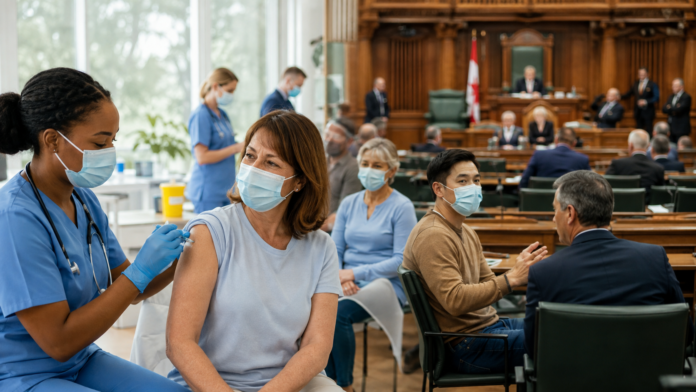
*How lawmakers decide pandemic preparedness—and why it matters for your family*
KEY STATISTICS
- The WHO released ‘The Role of Parliaments and Parliamentarians in Strengthening Health Security Preparedness’ in July 2024 to train elected officials.
- Global health security depends on policy decisions made at national government levels, not just medical institutions.
- Parliamentarians directly influence funding, emergency protocols, and public health infrastructure in your country.
When COVID-19 struck, you probably didn’t think about parliament. You thought about your family, your job, your safety. But the speed of your country’s vaccine rollout, the clarity of public health messaging, and whether hospitals had enough resources—all of it flowed through decisions made by elected officials in government buildings.
The WHO just launched a training program to help those officials make better decisions next time. Understanding why that matters, and what it means for your health security, is more practical than it sounds.
Why Lawmakers Drive Health Security
Health security isn’t just about doctors and scientists—it’s about the legal frameworks, funding mechanisms, and institutional structures that allow public health systems to function when crisis hits. Parliamentarians write the laws that govern disease surveillance, emergency response budgets, and international cooperation agreements. Without their buy-in, even the best medical evidence stays stuck in reports.
- Parliaments pass legislation that defines disease reporting requirements and outbreak response protocols.
- Legislators control health budgets, determining whether surveillance systems and stockpiles exist before emergencies.
- Parliamentary votes affect how quickly countries can coordinate with international health organizations during pandemics.
- Laws set by elected officials determine whether hospitals, labs, and emergency services have binding preparedness plans.
Why This Matters Now for You
Adults in your age group—35 to 45—are often parents, caregivers, and active in your communities. You’ve lived through multiple health crises: SARS, H1N1, Ebola, COVID-19. Your experience makes you acutely aware that government readiness isn’t a distant policy debate—it’s personal.
When preparedness gaps exist, it’s your children, aging parents, and colleagues who face the consequences.
- You have direct responsibility for dependents whose safety depends on pandemic preparedness infrastructure.
- Your professional stability hinges partly on whether government can manage health crises without economic collapse.
- You’re old enough to remember how unprepared systems felt in past outbreaks, creating real anxiety about future ones.
- You have voting influence and community voice—your engagement with these issues shapes your elected officials’ priorities.
Signs Your Health System Isn’t Ready
- Your country lacks a published, government-endorsed pandemic preparedness or response plan.
- Local hospitals or clinics report chronic shortages of basic supplies, ventilators, or diagnostic equipment.
- Public health agencies operate on yearly budgets instead of multi-year funding, forcing constant restarts.
- Politicians rarely discuss disease surveillance, healthcare workforce shortages, or emergency supply chains in debates.
- International disease data sharing is slow or absent—your country doesn’t participate in real-time outbreak alerts.
- Small health threats (flu clusters, foodborne illness outbreaks) are managed poorly, signaling gaps in infrastructure.
How You Can Strengthen Readiness
You can’t personally manage national health security policy, but you’re not powerless. Your role is to stay informed, demand accountability, and support leaders who prioritize preparedness. This means understanding what your elected officials are actually doing—or not doing—to strengthen public health infrastructure before the next crisis arrives.
- Research whether your country has a current, publicly available pandemic preparedness or health security plan.
- Ask your elected representatives directly about health system funding, disease surveillance capacity, and emergency protocols.
- Support funding for public health infrastructure, emergency supplies, and international disease monitoring—even when no crisis looms.
- Stay informed through reputable health agencies (WHO, CDC, national health ministries) rather than social media during threats.
Five Steps You Can Take Today
- Visit your country’s health ministry website and search for ‘pandemic preparedness plan’ or ‘health security strategy’ to see what exists.
- Contact your local parliament member or representative and ask them one specific question: ‘What is your country’s plan if a serious outbreak occurs?’
- Join or follow a local public health advocacy group that monitors and reports on healthcare system readiness in your area.
- Vote and encourage others to vote for candidates who prioritize long-term health infrastructure funding, not just emergency response.
- Attend town halls or community forums where health and emergency preparedness are discussed—your presence signals these topics matter.
The Trust Factor in Preparedness
One overlooked factor in health preparedness is trust. Even the best laws and funding mean nothing if the public doesn’t believe government health agencies when a crisis hits. Your skepticism isn’t irrational—it’s shaped by real gaps in past responses.
But supporting transparency, accountability, and evidence-based communication from your leaders now builds the foundation for trust when you truly need it.
- Public mistrust in health institutions stems partly from poor communication and unclear decision-making during past crises.
- Parliamentarians trained in health security are more likely to support transparent reporting and science-based public messaging.
- Communities with strong, trusted relationships with local health officials respond faster and more effectively to outbreaks.
- Your engagement with elected officials on these issues signals that preparedness matters—encouraging better communication.
Bottom Line
Health security isn’t abstract policy—it’s your family’s safety, your job stability, and your peace of mind when the next threat arrives. The WHO’s new training course for parliamentarians is one step toward better-prepared governments. But real change happens when elected officials know their constituents care about this issue.
By staying informed, asking questions, and holding leaders accountable, you’re not just protecting your own health—you’re strengthening the entire system that protects everyone.
HealthyInsight — always consult a qualified healthcare provider before making changes to your health routine.
Sources
- WHO launches unique training course to enable parliamentarians in global health security — WHO — News
- General guidance on pandemic preparedness and public health infrastructure — CDC
- Health security and emergency response frameworks — WHO