
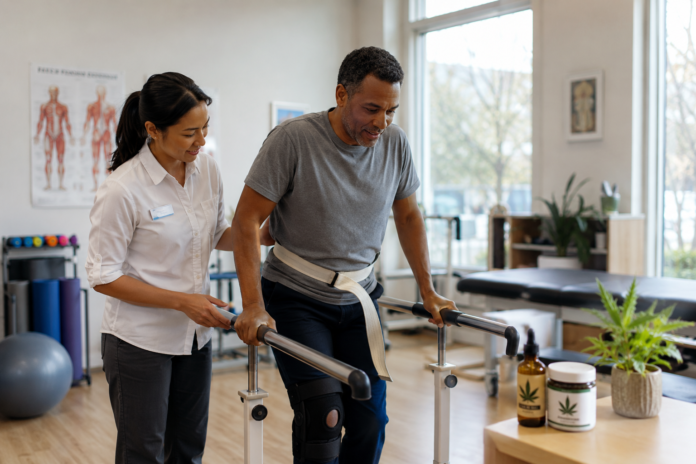
*What rehab doctors are learning about cannabis for muscle stiffness, anxiety, and recovery—and whether it might fit your situation*
KEY STATISTICS
- Medical cannabis is now legal in 38 U.S. states, reshaping how rehabilitation specialists think about symptom management.
- Research increasingly shows cannabis effects extend beyond pain, affecting muscle tone, mood, and sleep quality in recovery.
- Adults over 35 metabolize cannabis differently than younger adults, altering both therapeutic effect and side-effect risk.
If you’re in physical rehab for a spinal injury, stroke recovery, or chronic muscle tension, your doctor may have only offered pain pills or muscle relaxers—drugs with their own risks. But a growing body of research published in medical journals suggests that rehabilitation medicine specialists are discovering cannabis applications far beyond pain control: easing muscle spasticity, reducing anxiety around therapy, and improving sleep that fuels recovery. Before dismissing it as fringe treatment or assuming it’s just for pain, it’s worth understanding what the emerging evidence actually shows—and whether it’s a conversation worth having with your care team.
How Cannabis Affects Muscle and Nerve Function
When you experience injury or neurological changes, your muscles can become hyperactive or rigid due to signal misfiring between brain and body. Cannabis compounds interact with your nervous system’s cannabinoid receptors, which sit throughout your muscles, spinal cord, and brain. This is different from how opioids work and opens up different therapeutic windows.
- THC and CBD bind to cannabinoid receptors in the nervous system, reducing abnormal motor signaling that causes spasticity.
- Cannabis may stabilize inflammatory pathways after injury, complementing physical therapy rather than replacing it.
- Effects vary by individual genetics and prior cannabis exposure; age 35+ metabolizes THC more slowly than younger adults.
- Onset is slower than injected medications (30 minutes to 2 hours), making dosing and timing predictable for rehab schedules.
Why Your 35–45 Age Group Matters
Your age group faces a unique set of factors. You’re more likely to have sustained injuries with longer recovery timelines, and your body’s metabolism slows, meaning cannabis concentrations stay in your system longer. You’re also more likely to be managing comorbid conditions or taking other medications that interact with cannabis.
- Slower hepatic metabolism means THC accumulates more in older adults, requiring lower doses for same effect.
- You’re more likely to combine cannabis with prescription medications, increasing interaction risk with blood thinners, statins, or anti-seizure drugs.
- Age 35+ shows higher rates of comorbid anxiety and sleep disruption during recovery, areas where cannabis shows emerging benefit.
- Cognitive demands of your life (work, caregiving) mean side effects like impaired attention carry real-world consequences.
Warning Signs to Watch For
- Increased dizziness, confusion, or difficulty concentrating—particularly if driving or operating machinery during rehab.
- Worsening anxiety or paranoia, especially in those with personal or family history of mood disorders.
- Rapid heart rate or chest tightness, which can be serious in those with underlying cardiac conditions.
- Dependence signs: needing progressively higher doses, irritability when not using, or continued use despite negative effects.
- Falls or balance problems during physical therapy, indicating cannabis may impair proprioception more than expected.
- Interactions with blood pressure or blood sugar medications, resulting in unexpected spikes or crashes.
What Actually Supports Recovery
Cannabis doesn’t heal injuries—physical therapy, movement, and time do. But cannabis may reduce barriers to recovery by easing symptoms that prevent you from engaging in therapy. The evidence suggests timing and consistency matter more than dose.
- Use cannabis to reduce anxiety before therapy sessions, not as a substitute for showing up and doing the work.
- Combine with consistent, evidence-based physical therapy; cannabis manages symptoms, rehab restores function.
- Start low-dose, slow-titration approach (especially at 35+); many people find relief at lower doses than younger adults.
- Track mood, sleep, spasticity, and mobility weekly to objectively measure whether it’s helping or creating new problems.
Action Plan Checklist
- Discuss with your physiatrist or rehabilitation physician whether cannabis is legal in your state and appropriate for your specific diagnosis.
- If considering use, request baseline cognitive and mood screening to establish whether impairment is cannabis-related.
- Review all current medications with your pharmacist for contraindications; blood thinners and certain psychiatric meds carry real interaction risk.
- If approved, start with lowest available dose (typically 2.5–5 mg THC, or CBD-only trial) and wait 1–2 weeks before adjusting.
- Log timing (morning vs. evening), dose, and effects on spasticity, anxiety, sleep, and ability to do physical therapy.
- Schedule follow-up with prescriber every 4 weeks initially; cannabis interactions and accumulation in older adults require monitoring.
- Avoid driving for at least 6 hours after use; impairment tests show 35+ adults are more sensitive to coordination changes.
The Sleep and Recovery Connection
Sleep disruption during recovery is almost invisible—you might not label it a problem—but it silently undermines everything else. Cannabis shows promise for rehab-related insomnia, but timing and type matter significantly. Evening use can improve sleep, but daytime use often impairs the cognitive focus needed for therapy.
- Sleep deprivation during rehab slows muscle healing, reduces pain threshold, and worsens mood—creating a vicious cycle.
- CBD-dominant products show fewer cognitive side effects than high-THC products, but sleep benefit is less established.
- Evening-only dosing (vs. all-day dosing) preserves morning mental clarity needed for physical therapy engagement and safety.
- Poor sleep quality often reflects untreated anxiety; if cannabis improves sleep through anxiety reduction, the benefit is real and measurable.
Bottom Line
Medical cannabis for rehabilitation goes well beyond pain relief—emerging research shows promise for muscle stiffness, anxiety, and sleep that fuel recovery. At 35–45, your slower metabolism means you need a different approach than younger adults, and your medication list and life demands make safety monitoring essential. This isn’t a replacement for physical therapy or exercise; it’s a tool that may remove barriers to those things.
If you’re stuck in recovery, talk to your rehabilitation physician about whether it fits your situation, start low, monitor honestly, and reassess every few weeks. The evidence is evolving, but so are your options.
HealthyInsight — always consult a qualified healthcare provider before making changes to your health routine.
Sources
- Therapeutic use of cannabis in physical medicine and rehabilitation — Archives of Internal Medicine Research
- General cannabis safety and drug interactions — Mayo Clinic