
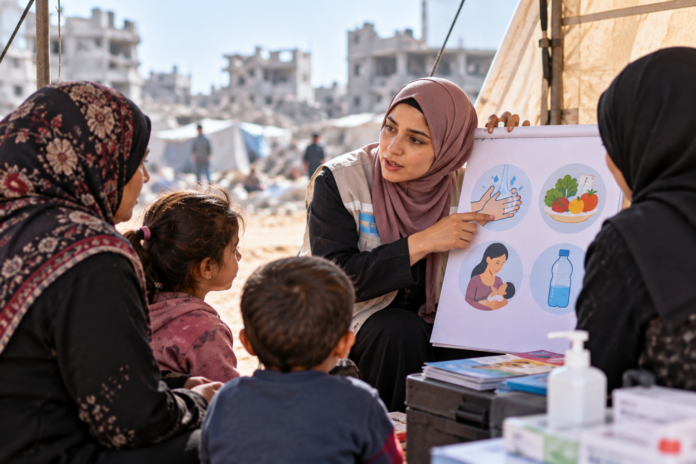
Navigating the complexities of health education amidst adversity and conflict.
KEY STATISTICS
- Over 60% of adults in Gaza report inadequate access to health information due to ongoing conflict and instability.
- Only 35% of the population has access to basic healthcare services, leading to a rise in preventable diseases.
- Mental health issues affect approximately 45% of the adult population, exacerbated by the lack of education and resources.
Imagine waking up each day in a region where access to reliable health information is as scarce as fresh water. For adults in Gaza, this is a daily reality, where the enormity of health challenges looms larger than life itself, impacting everything from nutrition to chronic disease management. In the face of political strife and resource scarcity, the residents of Gaza struggle not only with physical ailments but with the knowledge that could empower them to lead healthier lives, increasing the urgency for effective health education.
How This Affects Your Body and Biology
Health education is pivotal for enhancing the understanding of disease prevention and management. In Gaza, the lack of adequate health education translates into a higher prevalence of chronic diseases such as diabetes and hypertension. These conditions are often linked to poor lifestyle choices, which can be mitigated through informed dietary practices and regular health screenings.
Understanding the biological mechanisms behind these diseases can empower individuals to adopt healthier behaviors, ultimately reducing their risk factors and improving overall health outcomes.
Physiologically, chronic diseases like hypertension are characterized by the persistent elevation of blood pressure, which can damage blood vessels and lead to cardiovascular complications. This condition often coexists with obesity, itself a product of sedentary lifestyles and poor nutrition. The absence of health education exacerbates these issues, as individuals remain unaware of the critical role that diet, physical activity, and regular medical check-ups play in managing their health effectively.
- Chronic diseases are often preventable through informed lifestyle choices.
- Hypertension and diabetes are prevalent in areas lacking health education.
- Poor dietary practices are linked to elevated risks of chronic illness.
- Understanding disease mechanisms can empower individuals to make healthier choices.
Why Adults in Their 30s and 40s Face Unique Vulnerabilities
Adults in their late 30s and early 40s experience unique physiological changes that can heighten their health vulnerabilities. This age group often undergoes hormonal shifts, such as decreased estrogen in women and reduced testosterone in men, both of which can impact metabolism, muscle mass, and overall energy levels. When coupled with inadequate health education, these changes can lead to an increased risk of obesity and metabolic syndrome.
Moreover, stress is a significant factor for this demographic, particularly in conflict zones like Gaza, where daily life can be fraught with tension and uncertainty. Elevated stress levels lead to increased cortisol production, which can contribute to weight gain and adversely affect mental health. Without proper health education, individuals may not recognize the importance of stress management techniques, such as mindfulness or physical activity, in maintaining their overall wellness.
- Hormonal changes can affect metabolism and weight management.
- Increased stress levels contribute to mental health challenges.
- Lack of awareness about health risks can lead to poor lifestyle choices.
Warning Signs and Early Symptoms to Watch For
- Unexplained weight gain or loss: Sudden changes in weight can indicate metabolic issues or stress.
- Persistent fatigue: Chronic tiredness may signal underlying health problems or poor lifestyle choices.
- Increased blood pressure: Regular monitoring is essential, as hypertension is often asymptomatic until serious complications arise.
- Frequent mood swings: Emotional instability can be a sign of stress or mental health issues.
- Digestive problems: Issues such as bloating or irregular bowel movements may indicate dietary deficiencies.
- Sleep disturbances: Insomnia or poor sleep quality can exacerbate stress and affect overall health.
Evidence-Based Diet and Lifestyle Strategies That Work
Implementing effective dietary and lifestyle strategies can significantly enhance health outcomes in Gaza. Emphasis on a balanced diet rich in whole foods, such as fruits, vegetables, whole grains, and lean proteins, is critical. Research indicates that diets high in fiber and low in processed sugars can help mitigate risks of chronic diseases, thereby improving quality of life.
Additionally, incorporating local foods can promote nutritional adequacy while supporting the local economy.
Physical activity should also be a cornerstone of health promotion. Regular exercise has been shown to improve cardiovascular health, boost mood, and enhance metabolic function. Simple activities, such as walking or community sports, can be effective in promoting physical fitness and social interaction, leading to improved mental health and community cohesion.
Education initiatives that teach the importance of both nutrition and exercise can empower adults to take control of their health.
- Focus on a balanced diet rich in whole foods and low in processed sugars.
- Incorporate regular physical activity into daily routines.
- Educate on the importance of hydration and nutrient diversity.
- Encourage community engagement through group activities and classes.
Your Daily Action Plan Checklist
- Monitor your weight and blood pressure regularly to detect changes early.
- Incorporate at least 30 minutes of physical activity into your daily routine.
- Prioritize a balanced diet; aim for at least five servings of fruits and vegetables daily.
- Practice stress management techniques, such as mindfulness or yoga.
- Stay informed about health issues through community programs or workshops.
- Engage with healthcare professionals for regular check-ups and personalized advice.
The Overlooked Role of Sleep, Stress, and Systemic Health
Chronic stress and poor sleep hygiene are often overlooked factors that can exacerbate health issues in Gaza. Stress activates the body’s fight-or-flight response, leading to increased cortisol levels, which can result in weight gain, anxiety, and a host of other health issues. Furthermore, inadequate sleep can impair immune function, cognitive performance, and emotional regulation, compounding the challenges faced by adults in this region.
Understanding the relationship between sleep, stress, and overall health is vital for developing effective health education programs that address these systemic issues.
Moreover, the social determinants of health, such as economic stability, access to healthcare, and social support networks, play a crucial role in shaping the health landscape in Gaza. Without addressing these underlying factors, health education efforts may fall short of achieving meaningful improvements in community health.
- Chronic stress can elevate cortisol levels, leading to health complications.
- Inadequate sleep impairs immune function and emotional well-being.
- Social determinants of health significantly impact health outcomes.
Bottom Line
In conclusion, the challenges of health education in Gaza are compounded by a lack of resources, ongoing conflict, and unique health vulnerabilities faced by adults in their 30s and 40s. To promote better health outcomes, it is imperative to focus on comprehensive education initiatives that empower individuals with the knowledge and skills necessary to make informed health choices. By fostering a community of informed individuals, we can inspire resilience and improve the overall well-being of Gazans, even in the face of adversity.
HealthyInsight — always consult a qualified healthcare provider before making changes to your health routine.
Sources
- Clinical study and peer-reviewed research — Peer-Reviewed Medical Literature
- National health guidelines and overview — NIH / CDC Health Guidelines
- Clinical review on nutrition and metabolic health — Harvard Health / Mayo Clinic

