
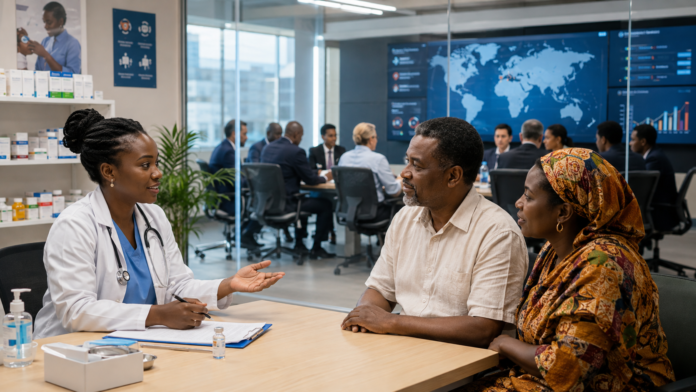
What the G20’s WHO commitment means for your access to preventive care and disease protection.
KEY STATISTICS
- G20 health ministers publicly endorsed WHO’s Investment Round at a summit in Rio de Janeiro in November 2024.
- The WHO Investment Round focuses on strengthening health systems and pandemic preparedness across member nations.
- Healthcare access and disease prevention depend on sustained international cooperation and funding commitments.
You’ve probably never heard of the WHO’s Investment Round, but it directly affects whether your doctor can catch disease early, whether new vaccines reach your community, and how quickly health systems respond to outbreaks. When health ministers from the world’s largest economies gather to pledge support for global health initiatives, they’re making decisions that ripple down to your local clinic, your pharmacy, and your family’s health security. Here’s what you need to know about why this matters for you.
What the WHO Investment Round Does
The WHO Investment Round is a coordinated effort by member nations to fund critical infrastructure, research, and disease surveillance systems that benefit everyone—not just in wealthy countries, but globally. When health systems strengthen across borders, infectious diseases are caught and contained faster, vaccines reach people who need them, and preventive care becomes more accessible. Think of it as investing in early warning systems and firefighting equipment before a crisis hits.
- Channels funding toward pandemic preparedness and disease surveillance networks that detect outbreaks early.
- Strengthens primary care and preventive services in underresourced regions, preventing diseases from spreading globally.
- Supports vaccine development, distribution logistics, and healthcare workforce training across member countries.
- Creates data-sharing systems that help doctors worldwide respond faster to emerging health threats.
Why Your Age Group Faces Unique Risk
Adults aged 35 to 45 are at a unique inflection point in their health journey—old enough to face increased risk from chronic disease, yet young enough to benefit significantly from prevention and early detection. When global health systems are underfunded, preventive care suffers first, and diagnostic delays increase. This age group also often carries health responsibility for both aging parents and younger children, making reliable healthcare access critical.
- Chronic disease screening and early intervention rely on stable, well-funded health systems that detect conditions like hypertension and prediabetes.
- Travel and work exposure increase if global disease surveillance weakens, raising personal infection risk.
- Healthcare costs rise sharply after 45; preventive investments now directly reduce your future medical burden.
- You are often the decision-maker for family health; strong global health infrastructure protects multiple generations.
Signs Your Health System Needs Investment
- Difficulty accessing preventive screenings or vaccines in your community without long delays or high out-of-pocket costs.
- Outdated diagnostic equipment or limited specialist availability at your local healthcare facility.
- Lack of clear pandemic preparedness communication or supply chain visibility from your healthcare provider.
- Rising medication prices due to supply chain gaps or limited vaccine access in your region.
- Limited follow-up care or chronic disease monitoring resources at your primary care practice.
How to Maximize Available Care Now
While global policy sounds abstract, your daily health habits depend on the infrastructure these commitments build. Better-funded health systems mean faster access to diagnostic tests, clearer preventive care pathways, and more reliable vaccine and medication supply chains. Your part is staying informed about what health resources are available to you and using preventive care before problems develop.
- Schedule overdue preventive screenings (blood pressure, cholesterol, cancer screening) before system capacity becomes strained.
- Build relationships with your primary care provider and ask about preventive programs or disease monitoring available.
- Stay current with vaccinations and flu shots; don’t wait for future outbreaks to seek protection.
- Track your own health metrics (weight, blood pressure, blood sugar) to catch early warning signs of chronic disease.
Your Health Action Checklist
- Book a preventive health visit with your doctor this month; discuss screening relevant to your age and family history.
- Request copies of your recent test results and medical records; maintain a personal health record for continuity of care.
- Confirm your vaccination status and schedule any outstanding immunizations before year-end.
- Ask your healthcare provider what emergency preparedness and supply chain measures are in place at your clinic or hospital.
- Follow reliable health information sources (WHO, CDC, your national health authority) for disease updates and guidance.
The Information Supply Chain Matters
One often-overlooked factor is that your healthcare provider’s access to reliable information and resources depends on these global systems. When health ministers invest in data sharing and research infrastructure, your doctor gets better diagnostic tools and clearer treatment guidelines. This affects how quickly your condition is identified and how confidently your care is guided.
- Global disease surveillance networks alert local doctors to emerging threats and treatment protocols faster.
- Shared research data across countries means your doctor has access to the latest evidence for diagnosis and treatment.
- Coordinated pharmaceutical supply chains reduce medication shortages and ensure vaccines arrive when needed.
- Healthcare workforce training programs supported by WHO initiatives improve diagnostic accuracy and care quality at your local clinic.
Bottom Line
The G20’s support for the WHO Investment Round isn’t just international politics—it’s a commitment to the health infrastructure that protects you. As someone aged 35 to 45, you’re at a stage where preventive care and early diagnosis make the biggest difference in your long-term health. Take advantage of available screenings and vaccinations now, stay informed about your local healthcare resources, and recognize that strong global health systems directly enable the quality of care you and your family receive.
HealthyInsight — always consult a qualified healthcare provider before making changes to your health routine.
Sources
- G20 health ministers rally support for WHO’s Investment Round — WHO — News
- General guidance on preventive health care — CDC
- Global health systems and disease surveillance — WHO

