
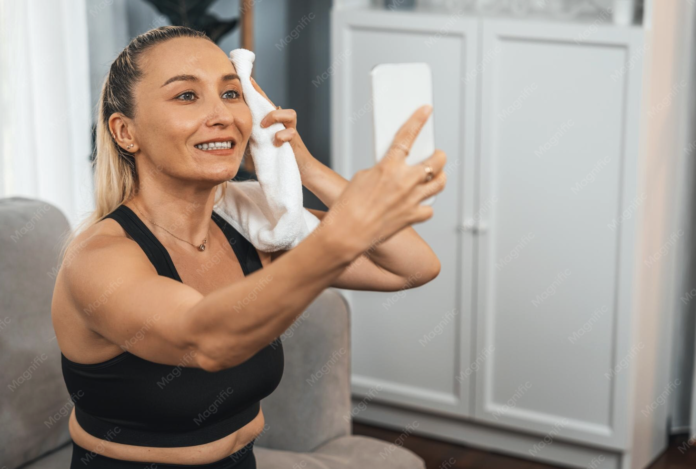
Your workout routine may be the most underrated skincare tool you own.
KEY STATISTICS
- A 2015 McMaster University study found that adults who exercised regularly had skin composition resembling people 20 to 30 years younger.
- Research published in the Journal of Investigative Dermatology found that moderate aerobic exercise reduces inflammatory markers linked to acne by up to 40%.
- Collagen production begins declining at roughly 1% per year after age 25 — and aerobic exercise has been shown to help slow that loss.
You have tried the serums, the cleansers, and the dietary tweaks — but your skin still looks dull, congested, or more broken out than it did a decade ago. What most adults in their late 30s and early 40s don’t realise is that consistent aerobic exercise may be one of the most powerful tools for improving skin health from the inside out. The connection between movement and skin goes far deeper than a post-gym glow.
How Exercise Affects Skin
When you raise your heart rate through aerobic exercise, your body pumps more oxygenated blood to the skin’s surface. This increased circulation delivers nutrients directly to skin cells and carries away waste products — including inflammatory compounds that can trigger breakouts and dullness.
Exercise also triggers the release of a protein called IL-15, which research suggests stimulates fibroblasts — the skin cells responsible for producing collagen. More collagen means firmer, more resilient skin with better elasticity over time.
Additionally, sweat itself plays a useful role. Sweat contains a natural antimicrobial peptide called dermcidin, which helps protect the skin against harmful bacteria that can contribute to acne. The key is cleansing the skin promptly after exercise to prevent clogged pores from sweat and surface debris.
Why Skin Changes After 35
Between the ages of 35 and 45, hormonal shifts begin affecting skin in compounding ways. Oestrogen levels start to fluctuate, which weakens the skin’s moisture barrier and accelerates collagen breakdown — leaving skin thinner, drier, and more prone to inflammation.
At the same time, cortisol levels — the body’s primary stress hormone — tend to rise during midlife due to career pressure, family demands, and disrupted sleep. Elevated cortisol directly increases sebum production, which contributes to adult acne and congestion in skin that may have been relatively clear throughout your 20s.
This hormonal environment makes the skin more reactive and less resilient. Exercise addresses both sides of this equation by lowering cortisol and supporting the structural proteins that keep skin looking healthy.
Warning Signs to Watch For
- Adult acne appearing along the jawline, chin, or cheeks after years of clear skin
- Skin that looks duller or more tired than it did in your late 20s, despite a good skincare routine
- Increased skin sensitivity, redness, or flushing that was not present before your mid-30s
- Fine lines or loss of firmness progressing faster than expected for your age
- Persistent low-grade breakouts that worsen around periods of high stress or hormonal fluctuation
What Actually Helps
The most skin-beneficial forms of exercise are moderate-intensity aerobic activities — brisk walking, cycling, swimming, jogging, or dance-based workouts. Aim for at least 150 minutes per week, which aligns with general health guidelines and appears to be the threshold at which skin-related benefits become measurable.
High-intensity exercise also has benefits, but extremely intense or prolonged sessions can temporarily spike cortisol. If you are dealing with hormonal acne, balancing vigorous sessions with lower-intensity movement like yoga or walking may help manage that hormonal trigger.
Resistance training complements aerobic exercise by supporting overall hormonal balance and maintaining muscle mass — both of which indirectly benefit skin quality. You do not need a single-minded cardio approach; a varied movement routine is both more sustainable and more effective.
Post-workout skincare matters too. Always cleanse your face within 20 to 30 minutes of finishing exercise. Use a gentle, non-comedogenic cleanser and follow with a lightweight, non-occlusive moisturiser to restore the skin barrier without blocking pores.
Action Plan Checklist
- Aim for at least 150 minutes of moderate aerobic exercise each week — split into manageable daily sessions if needed
- Add two resistance training sessions per week to support hormone balance and long-term skin structure
- Cleanse your face within 30 minutes of finishing any workout using a gentle, non-comedogenic cleanser
- Track stress levels alongside your exercise routine — high cortisol from overtraining can worsen breakouts
- Stay well hydrated before, during, and after exercise to support skin barrier function and circulation
The Sleep and Skin Link
One factor most people overlook is the connection between exercise, sleep quality, and skin repair. Deep sleep is the window during which your body produces growth hormone — the compound responsible for cellular repair and collagen synthesis in the skin.
Regular aerobic exercise is one of the most evidence-backed ways to improve sleep quality in adults over 35. Better sleep means your skin spends more time in active repair mode, compounding the direct benefits exercise already provides during waking hours.
If you are exercising consistently but still seeing poor skin quality, poor sleep may be the missing link. Prioritising a consistent sleep schedule alongside your movement routine creates a reinforcing cycle that benefits skin from two directions simultaneously.
Bottom Line
Exercise is not a luxury add-on to your skincare routine — it is a foundational tool for skin health, especially after 35 when hormonal shifts and collagen decline begin to accelerate. Consistent moderate aerobic activity improves circulation, reduces inflammation, supports collagen production, and lowers the cortisol that drives adult breakouts. Pair your movement habit with smart post-workout skincare and quality sleep, and your skin will likely reflect the effort.
Always consult a qualified healthcare provider before making changes to your health routine.
Sources
- Exercise and the skin: overview of the evidence — Journal of Investigative Dermatology
- Skin aging and the role of collagen — Harvard Health Publishing
- Physical activity and inflammatory markers in adult skin conditions — National Institutes of Health — National Library of Medicine
- McMaster University study on exercise and skin composition in older adults — McMaster University — Department of Kinesiology
- Cortisol, stress, and acne in adult women — Mayo Clinic

