
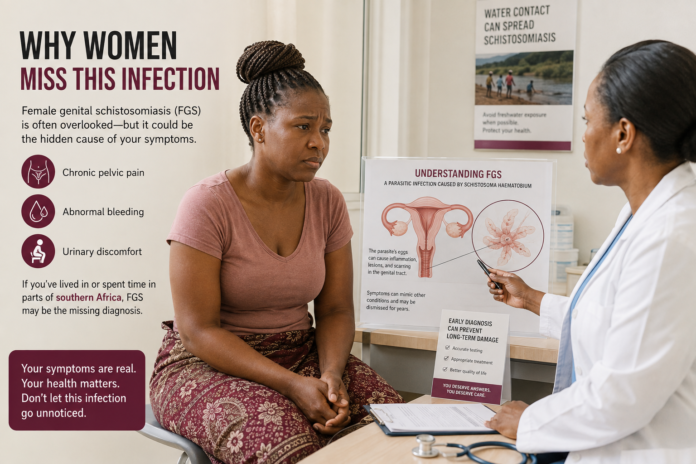
*A parasitic infection spreading silently in certain regions—and why diagnosis often takes years*
KEY STATISTICS
- Female genital schistosomiasis affects women in specific geographic regions, with self-reported symptoms often underrecognized by healthcare providers.
- Risk factors include proximity to contaminated freshwater sources and limited access to clean water infrastructure.
- Women aged 35–45 may carry undiagnosed infections from decades earlier, with symptoms worsening or evolving over time.
You’ve had pelvic pain, abnormal bleeding, and urinary discomfort for years—but every doctor’s visit ends the same way: “It’s probably stress” or “All your tests look normal. ” If you live in or have spent time in certain parts of southern Africa, you might be missing a diagnosis that affects far more women than most realize. Female genital schistosomiasis is a parasitic infection that can hide for decades, dismissed as gynecological dysfunction when the real culprit is a water-borne parasite.
Understanding what causes it and who’s truly at risk could finally explain symptoms you’ve been managing alone.
How the infection takes hold
Schistosomiasis is caused by parasitic worms that enter your body through contact with contaminated freshwater. When the parasites lodge in female reproductive tissues, they trigger chronic inflammation and a range of symptoms that mimic more common conditions. Most women don’t connect their symptoms to water exposure, so the infection often goes undiagnosed for years.
- Parasitic worms (Schistosoma haematobium) enter through skin contact with contaminated freshwater in endemic regions.
- Eggs deposited in reproductive tissue trigger inflammatory reactions, causing bleeding, pain, and tissue damage over time.
- Chronic inflammation can lead to scarring, tissue abnormalities, and increased cancer risk if left untreated for decades.
- Most infected women develop symptoms gradually; acute illness is rare, making early detection difficult.
Why midlife women are especially vulnerable
Women in midlife may carry decades-old infections acquired in childhood or young adulthood, with symptoms becoming more pronounced as they age. Your risk isn’t just about current water exposure—it’s also about where you’ve lived, traveled, or spent formative years. Geographic history and cumulative exposure matter far more than age alone.
- Infections acquired in childhood can remain dormant or slowly progressive, worsening in middle age as immunity shifts.
- Women with decades of exposure show higher rates of tissue damage and symptom complexity than younger, recently exposed women.
- Limited screening in endemic regions means many women age 35–45 were never tested despite significant childhood or early-adulthood water contact.
- Hormonal changes and other age-related health shifts may make chronic schistosomiasis symptoms more noticeable or severe.
Warning signs to discuss
- Chronic pelvic or lower abdominal pain without a clear gynecological cause.
- Abnormal vaginal bleeding or blood in urine, especially if recurrent or long-standing.
- Vaginal lesions, nodules, or tissue abnormalities noted during routine exams.
- Persistent urinary symptoms (frequency, urgency, or dysuria) unresponsive to standard UTI treatment.
- History of significant time in endemic freshwater regions (southern Africa, particularly South Africa) with new or worsening pelvic symptoms.
- Infertility or recurrent pregnancy complications without explained cause.
What actually reduces your risk
Water exposure is the core risk factor, but prevention depends on access and behavior change. In endemic areas, avoiding contaminated freshwater and ensuring clean water infrastructure are the most effective strategies. Once infection is established, lifestyle changes alone won’t clear it—medical treatment becomes essential.
- Avoid swimming, wading, or prolonged contact with untreated freshwater in endemic regions (particularly southern Africa).
- Boiling or filtering drinking water and ensuring treated water access reduces transmission and reinfection risk.
- Advocacy for clean water infrastructure in endemic communities addresses the root cause of widespread transmission.
- Regular screening for women with geographic or travel history to endemic areas enables earlier diagnosis and treatment.
Your action plan today
- Document your full water exposure history: where you’ve lived, traveled, or spent time near freshwater, especially in southern Africa.
- Bring this history to your gynecologist or primary care provider; specifically mention schistosomiasis if symptoms persist without clear diagnosis.
- Request testing (serology or imaging) if you have pelvic pain, abnormal bleeding, or urinary symptoms alongside geographic risk.
- If diagnosed, follow prescribed antiparasitic treatment fully; ask about follow-up testing to confirm cure.
- Connect with public health resources in your region to understand local water safety and ongoing transmission risk.
The overlooked diagnosis gap
Most women with schistosomiasis don’t realize they have it because symptoms develop slowly and overlap with dozens of other conditions. The real barrier to diagnosis isn’t the infection itself—it’s the gap between where the disease is common and where healthcare providers think to look for it. Stress and fatigue from undiagnosed chronic inflammation often become the focus, while the infection continues silently.
- Many providers in non-endemic regions have never learned to recognize female genital schistosomiasis, even in patients with clear geographic risk.
- Symptoms are often attributed to stress, gynecological dysfunction, or urological conditions, delaying parasitic infection diagnosis by years or decades.
- Chronic inflammation from untreated schistosomiasis increases fatigue, depression, and perceived stress, creating a cycle that obscures the true cause.
- Community and patient awareness in endemic areas remains low, so many women don’t connect their symptoms to water exposure.
Bottom Line
Female genital schistosomiasis is a hidden diagnosis for millions of women, especially in regions where freshwater contamination is common. If you’ve lived in or spent time in endemic areas and experience unexplained pelvic pain, abnormal bleeding, or urinary symptoms, your geographic history matters as much as your symptom timeline. Bring both to your doctor—and if they’re unfamiliar with schistosomiasis, don’t assume your symptoms are untreatable.
Proper testing and antiparasitic treatment can stop the infection and prevent decades of chronic complications.
HealthyInsight — always consult a qualified healthcare provider before making changes to your health routine.
Sources
- Prevalence and associated risk factors of self-reported symptoms suggestive of female genital schistosomiasis among women in KwaZulu-Natal, South Africa — PLoS Neglected Tropical Diseases
- General guidance on schistosomiasis and parasitic infections — CDC
- Female genital schistosomiasis: clinical features and management — WHO

