
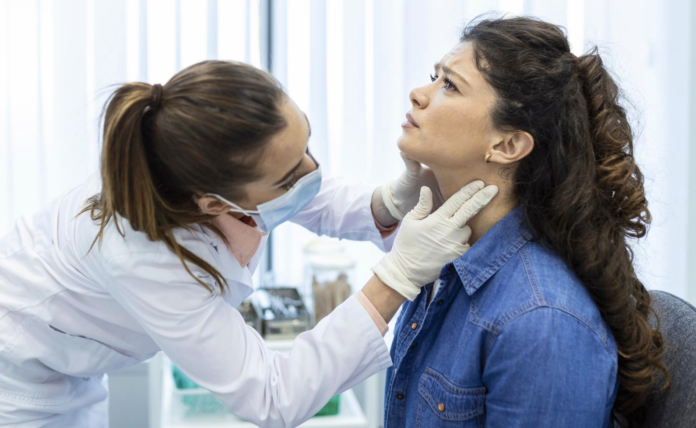
Most thyroid nodules cause no obvious pain — but your body is already sending signals worth taking seriously.
KEY STATISTICS
- Up to 65% of adults have thyroid nodules detectable by ultrasound, yet most never know it — American Thyroid Association.
- The 35–45 age range represents the period when nodule prevalence begins rising sharply, particularly in women — NIH National Cancer Institute.
- Fewer than 5% of thyroid nodules are cancerous, but early imaging significantly improves outcomes when cancer is present — Mayo Clinic.
You might not feel a lump. You might not feel sick at all. Yet right now, millions of adults between 35 and 45 are walking around with thyroid nodules they have never been told about — and a handful of quiet body signals that are easy to dismiss as stress, aging, or just a busy life.
What Thyroid Nodules Are
The thyroid gland sits at the base of your throat and controls the pace of nearly every system in your body — metabolism, heart rate, digestion, mood, and temperature regulation. A thyroid nodule is simply an abnormal growth of cells within the gland, forming a lump or cluster that can range from the size of a pea to a grape.
Most nodules are benign and produce no symptoms on their own. However, some nodules can become large enough to press on surrounding structures, while others may begin producing thyroid hormone independently — disrupting the body’s carefully regulated hormonal balance.
When a nodule becomes hormonally active, it can trigger a cascade of subtle effects: unexplained weight fluctuations, heart palpitations, heat intolerance, or low energy. These symptoms often arrive slowly and are frequently attributed to other causes, which is exactly why so many nodules go undetected for years.
Why Your 30s and 40s Matter
Adults in the 35–45 window are in a biological transition period. Hormonal shifts — particularly around perimenopause in women and declining testosterone in men — create conditions where thyroid function is already under increased demand.
This is also the decade when cumulative lifestyle exposure begins to show up in the body. Chronic stress elevates cortisol, which can interfere with thyroid hormone conversion. Years of low iodine intake, chronic inflammation, or radiation exposure to the neck area all add to thyroid tissue vulnerability.
Because this age group tends to attribute symptoms to work pressure, poor sleep, or getting older, thyroid nodules are rarely the first thing anyone suspects. That delay matters — because nodules that go unmonitored for years can grow, shift in character, or occasionally become something more serious before anyone catches them.
Warning Signs to Watch For
- A sensation of pressure, fullness, or mild tightness in the front of the throat — especially when swallowing or lying flat
- A hoarse or slightly changed voice that has persisted for more than 2–3 weeks without an obvious cause like illness
- Difficulty swallowing solid foods or a recurring feeling that something is caught in your throat
- A visible or palpable lump at the base of the neck, particularly noticeable when you tilt your head back
- Unexplained changes in heart rate, weight, body temperature sensitivity, or anxiety that don’t correlate with obvious lifestyle triggers
What Imaging Actually Shows
If a nodule is discovered, the most important next step is not panic — it is imaging. A thyroid ultrasound is the gold standard first investigation and is painless, non-invasive, and widely available. It allows a clinician to assess nodule size, shape, and internal structure with precision.
Certain ultrasound features flag a nodule for further investigation. These include irregular margins, calcifications within the nodule, increased blood flow, or a taller-than-wide shape. If any of these features are present, a fine needle aspiration biopsy — a quick outpatient procedure — may be recommended to examine the cells directly.
For nodules that appear benign on imaging, watchful waiting with repeat ultrasound every 12–24 months is a common and medically sound approach. The goal is to catch any growth or structural change early, before it becomes a more complex clinical situation. Your clinician will determine the right monitoring interval based on the nodule’s specific characteristics.
Action Plan Checklist
- Ask your GP or internist to palpate your thyroid at your next routine appointment — especially if you have noticed any throat pressure or voice changes
- Request a thyroid ultrasound if you have a family history of thyroid disease, previous neck radiation, or any persistent throat-related symptoms
- Get a full thyroid panel blood test including TSH, Free T3, Free T4, and thyroid antibodies to assess how your thyroid is functioning
- If a nodule is confirmed, ask specifically about the ACR TI-RADS or Bethesda classification — these are standardised systems that guide biopsy decisions
- Track any symptom changes over 4–6 weeks using a simple journal — persistent or worsening symptoms warrant prompt medical follow-up, not a wait-and-see approach
The Overlooked Risk Factor
One frequently overlooked factor is radiation history. Adults who received X-rays to the head, neck, or chest during childhood — a more common practice before the 1980s — carry a modestly elevated lifetime risk of thyroid nodules and thyroid cancer. Many people in the 35–45 age group may not be aware of this history or may not have shared it with their current doctor.
Iodine status is another underappreciated variable. Both iodine deficiency and excessive iodine intake have been linked to nodule development and thyroid dysfunction. This is relevant because iodine levels in the population have shifted over recent decades as people move away from iodised salt and toward less-processed diets without compensating elsewhere.
If you have never had your thyroid checked and you are in this age window, consider making it part of your next annual health review. It is a simple blood draw and a straightforward conversation — and for a gland that quietly runs so much of your daily biology, it deserves that level of attention.
Bottom Line
Thyroid nodules are common, frequently silent, and in the vast majority of cases, benign. But the signals your body sends — however subtle — are worth pausing for. At 35 to 45, you are at exactly the right age to catch changes early, get the right imaging, and ensure your thyroid is monitored by someone who knows what to look for.
Always consult a qualified healthcare provider before making changes to your health routine.
Sources
- Thyroid Nodule Clinical Practice Guidelines — American Thyroid Association
- Thyroid Nodules: Diagnosis and Management — Mayo Clinic
- Prevalence of Thyroid Nodules and Associated Risk Factors — NIH National Cancer Institute
- ACR Thyroid Imaging Reporting and Data System (TI-RADS) — Journal of the American College of Radiology
- Thyroid Function and Nodule Risk in Midlife Adults — The Journal of Clinical Endocrinology and Metabolism