
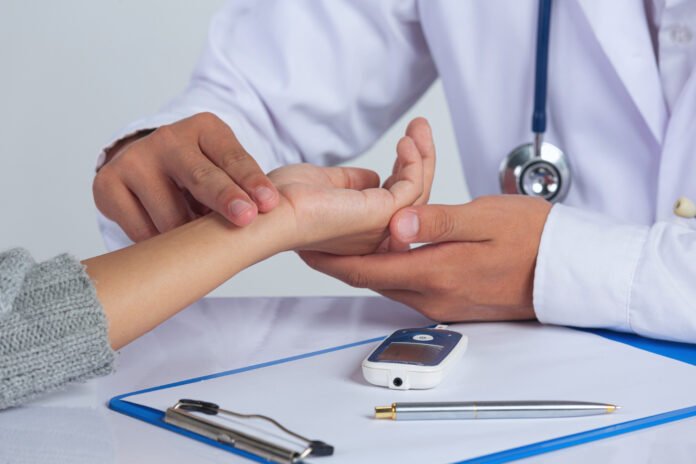
Continuous glucose monitors are quietly changing what daily diabetes management looks like for adults in their 30s and 40s.
KEY STATISTICS
- Approximately 38 million Americans have diabetes, with millions more undiagnosed, according to the CDC.
- Research published in The Lancet found CGM use reduced time in hypoglycemia by up to 43% compared to traditional finger-stick testing.
- Adults aged 35 to 44 represent one of the fastest-growing groups newly diagnosed with type 2 diabetes, per the American Diabetes Association.
If you have been managing diabetes with daily finger-stick tests, you already know the routine — the lancet, the small drop of blood, the sting that adds up over months and years. Continuous glucose monitoring, or CGM, is changing that experience in a meaningful way. For adults in their 30s and 40s navigating a new or existing diagnosis, this technology may be one of the most practical shifts in diabetes care in decades.
How CGM Technology Works
A continuous glucose monitor is a small sensor worn on the skin — typically on the arm or abdomen — that measures glucose levels in the fluid beneath the skin every few minutes, around the clock.
The sensor transmits readings to a smartphone or a small receiver, giving you a real-time picture of where your blood sugar is and where it is heading.
Unlike a finger-stick test, which captures a single moment in time, CGM shows trends — whether your glucose is rising, falling, or staying stable. That directional data is what makes the technology so useful for everyday decision-making around food, exercise, and stress.
Why Your 30s and 40s Matter
Adults between 35 and 45 are increasingly being diagnosed with type 2 diabetes at an age when career demands, family responsibilities, and lifestyle pressures are all competing for attention.
This age group is also more likely to have prediabetes without knowing it. Blood sugar irregularities in this decade can quietly contribute to fatigue, weight gain, and cardiovascular strain before a formal diagnosis is ever made.
Early adoption of CGM technology during this window — whether for confirmed diabetes or for monitoring prediabetes — gives adults a practical advantage. Understanding your glucose patterns now can meaningfully reduce the risk of long-term complications later.
Warning Signs to Watch For
- Persistent fatigue after meals, even when you believe you ate well
- Strong sugar cravings or energy crashes in the mid-afternoon
- Increased thirst or frequent urination that feels out of proportion
- Blurred vision or mild headaches that come and go without clear cause
- Slow wound healing or skin that feels unusually dry or itchy
What Actually Helps
CGM technology works best when it is paired with intentional lifestyle habits — not used as a passive tracking device alone.
One of the most valuable things CGM does is show you how specific foods affect your glucose. Two people can eat the same meal and have very different blood sugar responses. Seeing your personal data helps you make better-informed choices rather than following generic dietary advice.
Exercise timing also becomes clearer with CGM. Many users discover that a 10 to 15-minute walk after eating significantly flattens glucose spikes — a small habit with measurable impact.
Stress and sleep deprivation are two underappreciated drivers of blood sugar instability. CGM data often reveals how a poor night of sleep or a high-pressure workday can push glucose readings higher, even without any dietary change.
Action Plan Checklist
- Speak with your doctor or endocrinologist about whether CGM is appropriate for your current diagnosis or risk level
- If prescribed or approved, commit to wearing the sensor consistently for at least two weeks to gather meaningful trend data
- Log your meals loosely during the first week — not obsessively, but enough to connect food choices to glucose patterns
- Add a 10 to 15-minute walk after your largest meal and observe the effect on your readings
- Share your CGM data at your next medical appointment and ask your provider to help you interpret the trend graphs
The Overlooked Sleep Factor
One factor that rarely gets discussed in the context of glucose monitoring is sleep quality.
Research from the NIH shows that even a single night of poor sleep can raise fasting glucose levels and reduce insulin sensitivity the following day. For adults in their 30s and 40s who are already managing blood sugar, disrupted sleep creates an invisible but measurable setback.
CGM users who also track their sleep often notice a clear correlation — restless nights show up as elevated morning glucose. Prioritising seven to eight hours of consistent sleep is not a soft suggestion in diabetes management; it is a direct input into glycemic control that shows up in real data.
Bottom Line
Painless, continuous glucose monitoring is no longer a niche tool reserved for people with severe insulin-dependent diabetes — it is becoming a practical resource for anyone serious about understanding their metabolic health. For adults in their 30s and 40s managing or monitoring blood sugar, the combination of real-time data, trend visibility, and reduced testing burden makes CGM one of the most actionable advances in everyday diabetes care. Talk to your healthcare provider about whether it is the right fit for where you are today.
Always consult a qualified healthcare provider before making changes to your health routine.
Sources
- National Diabetes Statistics Report — Centers for Disease Control and Prevention (CDC)
- Continuous glucose monitoring versus self-monitoring of blood glucose in adults with type 1 diabetes — The Lancet
- Sleep and glucose metabolism in adults — National Institutes of Health (NIH) — National Library of Medicine
- Standards of Medical Care in Diabetes — American Diabetes Association
- Continuous Glucose Monitoring: A Review of Available Systems — Mayo Clinic Proceedings